Showing posts with label batman movie. Show all posts

Saturday, January 30, 2016

Man of Steel Answers: Why Didn't Zod Terraform Mars?

MAN OF STEEL Answers:
"Why didn't Zod Just Terraform Mars?"
Warner Brothers Pitcures' MAN OF STEEL has had an uphill battle to gain comic book movie fan audience acceptance since it took its first shaky steps to create a unified DC Comics Cinematic Universe. Many people know that this film is supposed to be the first of this new concept of a unified film mythology and it seems right that Superman (comic’s first “super-hero”) be the one who starts it. Nothing before it, not the beloved “The Dark Knight”, “The Green Lantern” (thankfully), nor, sadly, I know, the many “awesome” new television series are a part of this new DC Cinematic Universe.
Almost from the day it opened “Man of Steel” has been criticized for its departure in depicting Superman as the unwavering icon of righteousness that stands for truth, justice, and the American Way we remember from the comic book. Despite the fact all the fans, audiences, and critic stating that is what they find most boring about the character. It is made clear in the movie that we are not dealing with that character, but with the beginnings of that character. Still, the criticisms are leveled.
Criticism is leveled at almost all aspects of the film, from costuming, (No underpants on the outside!) to its overuse of action, (despite fans wanting Superman to “punch something.”), to its superficial alterations to Superman’s origins, (No crystalline palaces!) and mostly of his perceived behaviors, with the biggest controversy being that Kal El kills Zod. But the precedent of Superman killing stalwartly evil enemies has been long set in the comic books and, even in the vaunted movie Superman II. (No the “Donnor Cut” does not count. It’s ridiculous that Superman would turn back time, twice. Then, every Superman movie should end that way then.)
Most of these critiques can be easily answered. Why did he kill Zod? Because Zod put him in a position where there was no other choice. Why was Metropolis so decimated by their fight, possibly killing thousands of fictional people who never existed? Because when two super-powered, indestructible beings fight, that is what happens. They cannot just bounce off of walls. Just because these things came at the end of the movie, does not mean there will not be consequences. I hope. One of the things I particularly dislike about the recent flux of superhero movies is that there are no consequences to their actions. But that is an article for another time.
Possibly the third biggest critique leveled at “Man of Steel” is usually referenced as a “plot hole”. Which is the question this writing attempts to answer: Why didn’t Zod just terraform Mars?”
It is considered a plot hole because if Zod had just done that, Metropolis would have escaped destruction and those thousands of lives would not have been in danger to begin with. But, like those other critiques, this one can also be answered simply: Why didn’t Zod just terraform Mars? Easy, he couldn’t.

Thank you. Thanks for your time and reading this-wait. What, you need an explanation?
Well, to begin there are two main reasons why he cannot do this, one technical and the other is philosophical. Before you get worked up that the film never showed us these reasons, I answer, Snyder did. First, I present the Technical reason. There is an axiom in filmmaking that gets pounded into you as you study screenwriting: Show it. Don't say it. Meaning that if you can visually show the situation rather than having two or more characters give expository dialogue in a scene, then, you show it visually.
What has been shown in Snyder’s “Man of Steel” is the absolute failure of Krypton’s terraforming program. Indeed, we have all the visual evidence we need to confirm that Krypton's Terraforming for Colonization efforts were failures. Zod says it himself, when after escaping the Phantom Zone and going out in search of other Kryptonians; "Everywhere we went, we found only death."
In the following montage we see all the planets they came to, showing dead World Engines dead Kryptonians, and planets without atmospheres. Yet, somehow, this, as obvious as it was presented, (So obvious that I would have been laughed out of Screen Writing I at Columbia College Chicago, had I made this mistake.) Krypton’s terraforming failures, ironically, failed to register with audiences. So we know that terraforming Mars was then completely out of the question then, because like all of their outposts, it too would have failed. Before you make claims that they only failed on a societal level, once again, it is shown that some of the dead Krytonians are in space suits. So are Zod and his crew, because the planets are uninhabitable. Meaning that the World Engines failed to produce the desired affect and that was what led to the collapse of the outposts.
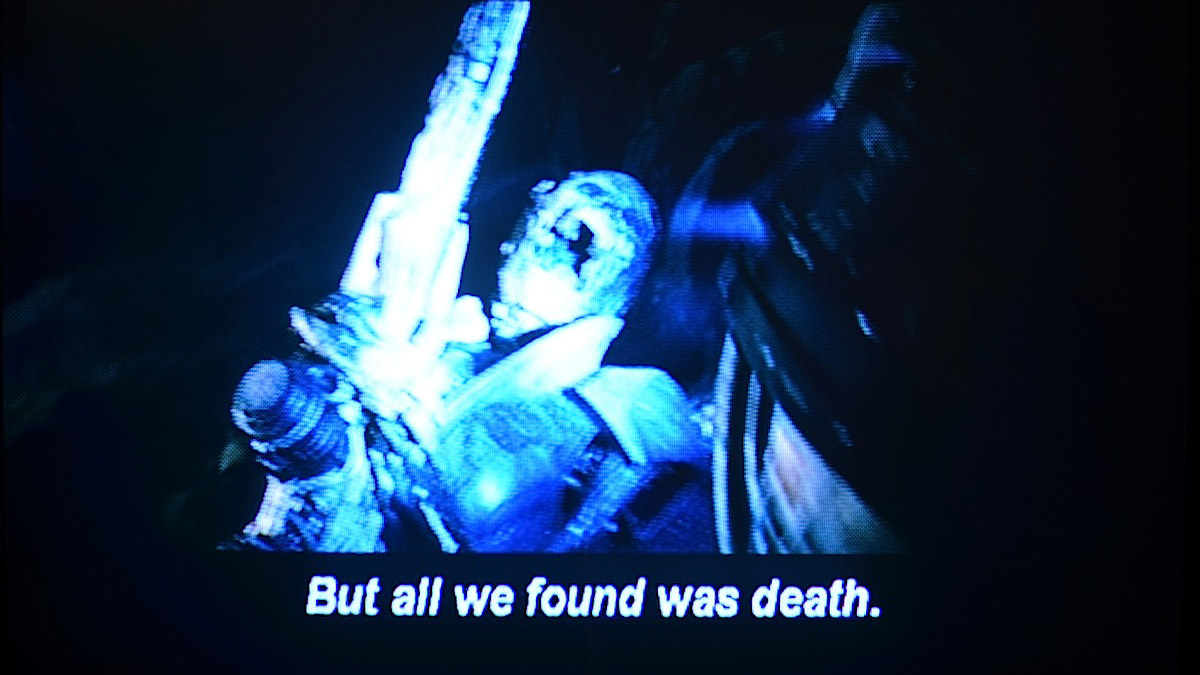
Now, knowing what a terrible failure terraforming is in this universe, we can then see that Zod's conquest of Earth via terraforming with the World Machines was a really BAD IDEA. It was doomed to fail and not only would he have killed every person on Earth in the process, he would have doomed that last of the Kryptonians who were with him due to their limited resources, thusly, he would have killed off the entirety of Kryptonian culture as well. If Zod simply took over the Earth and adjusted his survivors to the environment, then, cohabitation or conquest would have been within easy reach. “This is another plot hole,” you find yourself saying. No.
Zod could not do that either because of the Philosophical Reason.
Zod and Jor El were friends once. But something drove them apart. Their past relationship is mentioned many times during the film. What drove them apart were the differing philosophies on how to save Krypton. For Zod, its failure was due to the degenerate bloodlines contaminating their society, bringing it to a weakened state of governance. He is not looking at the bigger picture. He is only looking at the idea that force is the way to save Kryptonian culture. For Jor El, it was not that simple.
The world is about to end and yet everyone is ignoring that fact. (Sound familiar?) JorEl knows, he knows, that Krypton’s time is up. To recreate Kypton would be to recreate its failures and prejudices. But he wants to try and make the next generation of survivors aware of their failures. Jor El mentions that he had been looking for a suitable planet for a long time. Meaning his further research beyond terraforming was to look for instead, habitable worlds to colonize. Which is why he was adamant about "Looking to the stars".
You see? Jor El was not trying to save Kryptonian Society; he was trying to save the species! Failure of their society left no hope for the planet or the culture to continue on other worlds but the species could live on somewhere else, to start anew with differing rules, historical knowledge, and a real chance at surviving the wilds of other environments. His son’s natural childbirth changed those rules: a procreation program for another planet where they will not suffer the same failures in the philosophies of governing themselves or establish class before a child is born without the chances and choices to determine their own destinies. This, to JorEl, is what led Krypton to its demise. With his plan, they can make up a new society for themselves without adhering to the old world. These ideas are what drove the wedge between Zod and himself.
Zod saw the small picture of degenerate bloodlines, need of purity, of the survival of the culture through those old means of creating life. You see? Zod needed to terraform Earth as a sort of “Fuck You” to Jor El’s philosophy and Jor El’s plan to save Krytonian culture through integration. What drives Zod to overlook simple conquest of the Earth is the aspect of personal philosophical revenge that plays out.

Zod wants to terraform Earth, even if he cannot see, or, maybe he is unwilling to see, the terrible results it holds for his people. He needs to show Kal El that his way is the correct way and maybe using Jor El's relocation plan and selected planet to do so will lend greater credence to that in some aspect that only seems to make sense to himself. But Kal can see right away that this is wrong. Kal is still a Kryptonian here, but his being undecided about his place in the world suddenly finds focus when the only home he has ever known is threatened. Kal El, the Kryptonian becomes Clark Kent and when he must decide which culture to save, he then becomes child of Earth.
But Zod's true failure was that he was so damn adamant about NOT GIVING UP THE PAST. Sounds mighty familiar to me. His unbridled madness to recreate the Historic Krypton again blinded him to seeing the potential of this new planet and possible futures. This is how Jor El saw the earth as a world of potential beyond the failures of Krypton. Kal El realizes this as well. So does Zod when he sees that Jor El’s philosophy of starting again on Earth taking root his son when Kal El proclaims, “Krypton had its chance.”
Which is then why Zod vows to destroy every human once Kal El thwarts his plan. We see how this philosophical defeat affects Zod, it drives him to madness, to paraphrase, “That is the sole purpose for which I was born. My soul. That is what you have taken from me.”
“I'm going to make them suffer Kal, these humans you've adopted. I will take them all from you, one by one.” It breaks Zod, mentally. It drives him mad to the point of murderous destruction. Then, through the following fight, we see Zod’s changed nature and belief that he needs to conquer Jor El’s philosophy through genocide, which leads ultimately to putting Kal in a position where he needs to ends Zod’s life. So it become less about Superman flying off to an empty location to keep humanity safe, but having no choice but face the threat right there, to end that threat as quickly as possible. But this also means breaking his final connection to his past self as a Kryptonian, a connection whom, ironically, turns out to be Zod himself.
So we have seen how absolutely wrong Zod was about everything about trying to “Save Krypton” and how his fanatical devotion to such a wrong-headed ideology breaks him mentally, turning him into a genocidal maniac that it fell upon Kal El to have to kill to end that threat. Maybe we can see some real life parallels in this?
With the recent release of the trailers for the upcoming “Batman v. Superman: Dawn of Justice”, it seems that Warner Brothers Co. is taking into account what happened in “Man of Steel”, most especially, the destruction of the climactic end, as well as, touches on the fear espoused by Jonathan Kent (Kevin Costner) about how the people will fear Kal El. Excellent stuff for a follow up, though I am not so sure now about the contrived conflict with Batman now in light of all this. I hope they do not gloss over this to have Batman take over the story.
The teasers and trailer lead me to believe that “Batman v. Superman: Dawn of Justice” could be a great follow up to “Man of Steel”, a great continuation of the growth of Superman – it is just not going to be a good Batman story. While I was one of the first to champion the addition of Batman so early on in this cinematic universe, the casting of Ben Affleck has taken the wind from my sails in my excitement about the movie.
Now it seems that the ramifications of “Man of Steel’s” destructive conclusion will be pushed off to service the Batman Versus plotline. But when you see the Batplane mowing down exploding cars in the trailers, I am sorry to say that we do not care about all the destruction in the end as long as it is philosophically justified, or, championed by a Batman. When the destruction of the enemy is justified by a Batman’s actions, does that not make him as fanatical as Zod? I digress.

Zod was operating on a failed premise: the resurrection of the Historical Kryptonian culture on Earth through terraforming. His fanatical zeal for this ideology is what brought about his death at the hands of Kal El; that he could not see, or chose not to see, that terraforming the Earth using such failed technology as the World Engines would doom the surviving Kryptonians from the start. By proceeding with such a failed plot, did they make Kal El decide definitively that he is a child of Earth and pushed him to defend his home, thus setting him on his path to become the hero we all know....


Humbly submitted,
Ernest M Whiteman III
January 2016

Wednesday, August 8, 2012

People Deserve to Have Their Faith Rewarded


Sometimes People Deserve to Have Their Faith Rewarded
A Reflection on Batman on film
and
A Review of “The Dark Knight Rises
Directed by Christopher Nolan

Reviewed by Ernest M. Whiteman III

I admittedly was very excited about seeing Christopher Nolan’s final Batman film The Dark Knight Rises. After he revived the franchise after the awful “Batman and Robin” with his “Batman Begins” in 2005 and “The Dark Knight” in 2008, I found the series a perfect reflection of what I had always wanted from Batman on film. Now, I did not get everything I wanted; Batman chasing a serial killer by going all CSI and Will Graham or taking out a horde of ninjas Bruce Lee style but that was never for me to force into these films.

I, like most fans around my age, have had a life-long connection with the DC Comics character of Batman. But I have also, thanks again to my dad, have had a life-long connection to Batman on film, of seeing a man in a costume running around in the real world, making it real for me because my young mind could not fathom how films were made. They were documentaries to me. Star Wars and Batman were filmed as they happened. They were real because the people on screen took them seriously and acted serious about the situations. That has become the essence of filmmaking to me now, not, reflecting nostalgic homage and setting it to cool music, not trying to be smarter than your audience or the material. But making it real.


I remember watching a super eight-millimeter silent reel on my dad’s projector of the 1943 Columbia Pictures Batman Serial. It was Chapter 14: The Executioner Strikes. It was only a silent reel, it was black and white and set in the 1940’s but it awed me to see a live-action Batman running, moving, punching people and escaping that pit with the closing walls with daggers attached as I had no idea that there was a previous chapter’s “cliffhanger”, only to be thrown into another pit with crocodiles or alligators in it and since I had no concept of the serial format of cliffhangers, we only had the one chapter, I just accepted that that is how movies could end, thus influencing my own filmmaking in that sometimes, the good guys don’t win all the time. Which came full circle in “The Dark Knight” and whetted my anticipation for “The Dark Knight Rises”. I’ll come back to this later.

Because it was a silent reel, I was not subjected to the comical, at times racist dialogue, the hammy over-acting or to the amateurish fights, because the motor in the projector played the films at a slower frame rate. It all looked good to me. Fantastic. Seeing your hero on a screen, duking it out with criminals is vastly profound. Seeing that bat logo stretched across the chest was singular and elemental to the experience of seeing my hero on the screen. This was the Batman on film that I grew up with.

Honestly, I never saw one episode of the 60’s “Batman” TV series. Not, one, episode. Even today. But, I remember we had View Master cards of it and that was the first time I saw a live-action Batman in color and, without experiencing the high camp, it was highly impactful. Batman and Robin were as colorful as I remember them in the comics. But, I remember finally seeing Batman the Movie with Adam West and was so let down by the high jinks that I never rented it again or bought it. Even today. Only now do I appreciate the humor in small doses. I cherish the “Some days you just can’t get rid of a bomb” skit and the gusto the actors brought to the characters. But for me, and possibly me alone, this was not the Batman I wanted. I wanted Batman as he was portrayed in the comics I read – serious, dramatic, athletic and cool-looking. I remember my brothers and I going over lists of who would be a great movie Batman whenever we watched TV or videos. Our pick: TV’s Jon-Erik Hexum, (Cover-Up) who we believed brought the right balance of Bruce Wayne’s looks and Batman’s athleticism. Alas, his passing ended that wish for my brothers and me.

Of course, it was a long period of waiting for a new Batman movie. Every so often I would hear a bit of news that it was moving forward. I kept the faith about seeing a good Batman movie. In the meantime, we saw a string of successful Superman movies and just knew, Batman would get his chance to shine. We just had to keep the faith. I cannot help now but reflect on the irony of with the final chapter of the so-called “The Dark Knight Trilogy” coming to pass and its success, we now wait for a new Superman film to give him his chance to shine.

I still remember it. I was in U.S. History class my junior year, sitting there with Marty, Pat and Justin. Flora and Regina were probably nearby as they were cool, school chums I had in the day. We used to get a subscription to Newsweek to keep up with and discuss current events. The cover story was “The Wimp President” about George H.W. Bush’s first few months in office as President of the United States. Now, up to this time the news I had heard about the new Batman movie was disturbing. Tim Burton, whom I had never heard of, was directing the movie. Michael Keaton had been cast as Bruce Wayne and that seemed to upset much of the United States. I didn’t get it either. I read the explanations – Burton needed an actor you would believe needed to don a bat suit to scare criminals. I was not convinced. Mr. Mom and Bill Blazejowski just could not pull it off, in my mind.

Then, I open the magazine to the Arts and Culture section. My mind… was… BLOWN!


This one image converted me to fully embrace 1989’s Batman. It was dark and quasi-serious and Batman looked fucking cool with the black armor. It set the template for movie Batmen in the years to come. Movie Batmen will from now on always don black armor. It makes sense. I held on to that issue of Newsweek, saved other magazines that had any images from the upcoming film. I went and saw the trailer attached to “Bill and Ted’s Excellent Adventure”. I read and saved every scrap of info and images that came out. I got the t-shirts. I remember we recorded a segment on CBS’ “West 57th” news magazine program, which featured an interview with Michael Keaton because it had some movie footage. Needless to say, I was hyped to see it.

I saw Batman in the theater a total of six times in the little hamlet of Riverton, Wyoming.

Finally, my mom had to put her foot down proclaiming that we saw it already. We waited for weeks for it to hit VHS and bought one at full new VHS price when it first came out. The first time we ever waited to buy a first print film the day it was released to home video. Not the last. I used to take it to school to watch on the library VCR during my free period. It became so popular that the school library eventually bought its own copy and it was in constant play at my high school. Indeed, that was the year of the Batman. I was known in our tiny high school as that “Batman Guy”.

Looking back through the fondness and nostalgia I have for the Tim Burton film, I see the flawed work that it is. I disliked that Joker killed Batman’s parents, that Joker ate up much of the screen time, I hated that Batman could barely fight and would not know until decades later how Peter Guber and Jack Nicholson basically hijacked the script. Looking back I see it was more about style over substance. The actors didn’t bring any deep characterizations to their performances. It was trying to balance a dark tone with family-friendly fun. Nicholson was just mugging around. And Bruce simply brooded and chased a girl. But I loved the design of Gotham City, the Batmobile and Batwing, I loved the black armor and the yellow logo splashed across his chest. Plus, you just cannot go wrong with a Main Title Theme such as Danny Elfman’s.

Sufficed to say, that Batman, as a character, as a movie, as an ideal has had a large impact on me personally in 1989 and for that year and a few after, I was enthralled by the new cinematic adventures of the Caped Crusader. I followed the films series, watching “Batman Returns”, “Batman Forever” and the aforementioned “Batman and Robin”. But none built on the established tone of the first. Every one seemed to be about Bruce sitting in his brood chair fighting internally whether he is Batman or not, until the bat signal flashed on and then what followed was a silly caper involving a rotating door of actors trying to one-up Jack Nicholson. No complex plot or serious acting. No relationship with Gordon or hard choices to make. No detective skills or consequence for his actions, no toll on his lifestyle.

It all felt trite and stale and that Batman would be like this forever. Sure, I enjoyed Batman and Batman Returns, Batman Returns even more so. But once you strap missiles onto penguins and flashy green laser clouds bellow from the top of a secret base that looks like a stylized blender, you kind of lost me there. With every new film a sense of complacency seemed to pervade as the series devolved into garish formula. Gone, was the quasi-serious tone, the attempt at any sort of visual consistency and character development. In its place were movies developed to make money and sell toys. This is the Geek Curse. When something becomes popular amongst a particular audience, then it must be marketed to ad nausea. It seemed to be a thing that would carry on perpetually, just adding different famous people to the cast. The spark was gone. So many lost their taste for Batman on film.

I had even stopped collecting comic books for a long time. Still, I continued to collect Batman action figures. I still do. There is the elemental, spooky-cool aspect of his look, which still appeals to me. The story of his origins still transcends any contemporary story that they could tell in the comics today. The comic books stories that I favored most were ones that took place outside of the quagmire of comic story continuity – The Dark Knight Returns, Batman: Year One, Kingdom Come and my all-time favorite Batman story, Gotham by Gaslight. Batman transcends his humanity in the comics now. He is the intelligent detective with a plan that is always one step ahead of everyone. A sane Hannibal Lector, if you will. He can beat the Mightiest Superhuman in every battle they have been contrived to have.

Indeed, like his DC Comics contemporary Superman, he had become something so powerful as to lose touch with the realistic aspects of his core character, which was his greatest appeal to fans. He was a human being. That, if we applied ourselves, hone ourselves to mental and physical perfection, if we then put on a cape and cowl and wore a belt of gadgets, we could be Batman. Indeed, that was one of my fondest wishes. Which leads me to another way the character affected me, Batman made me want to do good for others. Truly.

But the Batman of the comics was dealing with demons, fighting off aliens and warping through other dimensions, much like the campy sci-fi stories of the post-Wertham/Comics Code Authority Era. Sure, it was gritty, edgy and serious, but in the end, he still fought Darksied and sat in the Justice League’s orbiting satellite monitoring for alien invasions and he still beat Superman every single time they fought. Gone, was the dark knight detective and in its place, an angst-filled, know-it-all that even the Justice League couldn’t quite trust. Needless to say, I tuned out of the Batman comic books and my fervor for Batman waned as I attended film school in Chicago.

Then, in the spring of 2004 in the computer lab at Columbia College, out of curiosity I looked up the news on the latest Batman movie. My mind… was… BLOWN!


Then, what in retrospect seemed like the Perfect Storm of Geekiness, we went to see the Pixar movie The Incredibles and in front of the movie, not only was there a trailer for Star Wars Episode III: Revenge of the Sith, but also a trailer for Batman Begins. This movie had snuck up on a lot of people that when Christian Bale opens the cabinet and reveals the cowl, many in the audience remarked “Hey, it’s a Batman movie” and by the time the title came up at the end of the trailer, there were whoops and clapping. Batman did indeed return. We had only to have kept the faith.

The Dark Knight Trilogy Recap
This is how much Batman Begins impacted me. Not only did I see it a total of five times in the theater proper, we snuck into showings after Star Wars: Revenge of the Sith on numerous occasions. Yep, 2005 was the best year for me as two franchises of my childhood came out with new material. Nolan’s origin story struck a chord with its reality, well, reality for the childhood part of my imagination.

Batman Begins captured the essence of the mystique of Batman. That he is a frightening creature out to combat injustice. That he lurks in shadow and, to use a line from the film, uses fear against those who prey on the fearful. It explored his origin in a way that was never explored before. The scene where he attacks the crooks unloading freight at the docks, the gunman screaming, “Where are you?” and having Batman behind whisper “here” is the Batman I had always wanted to see and Christopher Nolan brought that to me. The style, design and photography were spot on. The casting was perfect, with Christian Bale as the perfect Bruce Wayne and Batman. The open ending of “The Card”, the speech on escalation, the final scene moved me as a comic book and Batman fan. I was hooked. I thought there could never be a better Batman movie than Batman Begins.

I consider The Dark Knight to be not only one of the greatest superhero movies of all time but a great movie in general. It is one of my all-time favorite movies. From beginning to end, it is a taut thriller and well-planned caper film, which is more than I could ask for from a Batman movie. He isn’t fighting devils, mutants and vampires, nor dealing with aliens from other dimensions. The characters have that weight that was missing from Burton’s films. They showed growth and change. Now, here is a Batman of flesh and blood dealing with situations in the real world, or at least, the real world of my childhood imagination.

The Dark Knight not only pushed Bruce Wayne to his physical limits but his ideological limits as well. Can he continue to be Batman in the weight of crushing brutality that is inflicted on him physically and spiritually through his want for a life with Rachel? Can he continue to be the symbol of hope when it leads less-prepared men to violent acts in emulation of Batman? And can he still be Batman when he sees that an agent of chaos overturns his idea of simple criminality, which itself is a direct escalation of his own vigilante actions? What is Batman prepared to do when the symbols of good he defends are corrupted? It is simple. He takes the fall.

Again, that final scene is one that will never be topped in my book. I still choke up when the cops begin to move in, knowing the sacrifice Batman is making. We see Batman at his nadir. On the run for crimes he never committed to insure that symbols of righteousness are never doubted. What a great ending. It struck me as much as that image of Batman being tossed into that pit full of alligators I saw as a child: sometimes, the good guys can’t win.

Or, they sacrifice the chance at something good because the truth is not good enough. That message struck home with me. It still lingers. I made some sacrifices myself. Giving up those chances too because the truth is indeed not good enough. You see how this comic book character has had a deep impact on my life. Batman and Three Kingdoms are the fictional components that have helped shape my ideas of integrity. That is the impact of The Dark Knight that I still feel today.

On The Dark Knight Rises
So why did Batman take the fall?

You may have noted that in my recaps of the previous Nolan Batman films I make no specific reference to the villains or to the overall plot and capers of the films. Because, to me these are not what the core of this now-trilogy is, it is the growth of the character and story arc of Bruce Wayne. Of course, too many viewers remained attached to the performance of Heath Ledger as the Joker and could not help but compare this entire new film to that one, single role. Bane needed to be this, or Bane needed to be that. Or, Bane wasn’t this or was trying too hard to be that. Bane is nothing but the final obstacle that Bruce Wayne must overcome for his story to be complete. Nothing more. You need to toss the Joker out with the other extraneous stuff and keep in mind the emotional touchstones of the trilogy, the story and character arcs of Bruce Wayne and Batman. Because that is what this has become, a trilogy and this is the closing chapter.

For me, the payoff is the closure of the story of Bruce Wayne. If you are say that certain characters need to be portrayed a certain way to fit your idea of things, then you are missing the point entirely about how Bruce Wayne’s story arc is played out. From Batman Begins we are given Bruce Wayne’s story and it is an emotional one, one of an orphan trying to make sense of a shattered life and how he chooses to fight back. But, the intelligence of this trilogy is that once he chooses a path for justice, we are not simply left to leave him to it, like the comic books do, like the previous film series did. No. There are consequences and brutalities that he will endure because of that choice. We see what the cost is to his sense of living a life.

Which is why Bruce’s final scene with Alfred is the most important of the movie, possible the trilogy. As Bruce states in the first film, people need dramatic examples to shake them out of apathy. So, Alfred leaves him. It spells out what this entire trilogy was leading up to, “You’re not Batman anymore….” Bruce needs to move on beyond his trauma and live life again. This again, is something I can relate to very much. The function of the plot and the action and the villains are only to serve the ending of Bruce Wayne’s final story. This closing chapter showed us why Batman took that fall in The Dark Knight. So he could learn to pick himself back up, to move beyond his trauma and live life again.

The Dark Knight Rises takes place eight years after the events of The Dark Knight. Peace in Gotham City has been bought at the high price of Commissioner Gordon’s lie and Batman’s reputation. Indeed, the trauma of the battle with Harvey Two-face has left Bruce and Gordon damaged men. But the appearance of Bane, a former member of the League of Shadows arrives to cash the check, if you will, on that bought peace. Bane all but destroys Batman and Bruce Wayne and declares martial law in Gotham City, giving its citizen a false sense of equity and justice. Bruce must rise out of the pit and return to reclaim his city. But unknown to him are the enemies in the shadows and the heavy choice of making the final sacrifice to save the city. This movie gave me the much-needed closure I felt lacking in the previous film series, which is simply a remnant of seeing that old silent serial chapter. As the final chapter in a trilogy, The Dark Knight Rises tied-up Bruce Wayne’s story arc in a very Christopher Nolan fashion – on his own terms.

The first time I saw The Dark Knight Rises was at the Dark Knight Trilogy Experience at AMC in Skokie. Seeing them all together may have lent to the sense of The Dark Knight Rises being a bit underwhelming because of the finality of it, because of that sense of closure. It did not turn out the way I wanted it to but the emotional touchstones of Bruce Wayne’s journey made sense. Of course, Nolan gave the fanboys what they wanted and they still don’t seem to be satisfied. The reviewers at RedLetterMedia had it right about the emotional cues of the story often take precedent over story logistics.

Walking out of the theater I felt underwhelmed. Like something much bigger was supposed to happen. Then, on the long walk home, I thought more about what I saw and how it fit in with the previous films. This whole trilogy was never about the capers and adventures that we found Batman in. It was the emotional journey that Bruce Wayne took in learning how to move on and what he needed to do the shake Gotham City out of its apathy. There is so much more in that movie. It was about Batman as a symbol that is eternal can be carried on. That sometimes the hero must lay down their lives.

The more I thought about it, the more I smiled at how nicely wrapped this final chapter was. Sure, there was no Joker-sized performance, but that was not the point. I love the little touches to past movies and the comics this movie had. I loved the small scenes: Selina Kyle’s introduction, (She indeed steal the show.) Batman in the cave without his cowl on (A shot fans screamed for), Bane’s dismissing of Batman’s theatrics, when Gordon’s secret about Harvey Dent is revealed, I found it touching that he called Batman his friend, his friend that, “plunged their hands into the filth so you could keep yours clean”, Alfred’s speech on truth, how Batman reveals himself to Gordon (A reflection of how he did so with Rachel) and finally, who could forget Batman’s final choice, “Not everything…. Not yet.”


I saw it again that same day. My mind was blown. My faith rewarded.

Conclusion: Anybody can be The Batman….
Today, there seems to be a backlash against this last Nolan Batman movie. Many are not content with it and criticize it to no end. That’s fine. For me it was complete and good. I enjoyed it and how it capped off a great series of films. The backlash and the anger at it is only the passing sound of this movie’s finality. We are angry because there will not be another Nolan Batman. He gave us what he promised – a top-notch trilogy about Batman. Who would have thought that would have been even possible? Because of these movies, I know that batman on film can be done right and I am looking forward to what is done with the character in the future.

These movies continue to inspire me as a filmmaker and writer and artist. The character, his heroics, the silhouette, the drama and the quality of craft also resonate deeply with me. Seeing that bat logo stretched across the chest is singular and elemental to the experience of seeing my hero on the screen. This is the Batman on film that I grew up with and which continues to inspire me as a person of integrity to this day.

When I was a little boy, when we still lived in our old house, my older brother Ken had made a homemade Batman suit. It was rough by any standard. It was simply a cape and a cowl. But because of my imagination, it held such potential and dreams. One of my fondest memories is when my brother let me play with it. I donned the paper bag mask and pinned the cape and ran out into the front yard. It was glorious.

For a few hours that day I was the hero. I ran around saving my little sister and her dolls from robbers. I was a real kid in a mask and cape in the really real world of my imagination. For those few glorious hours, I was Batman. Finally, I had to take off the cape and cowl and give it back. It was over. But the dream of being that hero that helps others was flared. Even if was made out of a paper bag and leftover fabric, that time running around truly did teach me that a hero can be anyone. That was always the point.

Highly Recommended


2012 – Ernest M. Whiteman III